Style Guide

How to Build a Spring Wardrobe

Build a spring wardrobe with lighter layers, smart fabrics, and repeatable outfit formulas that handle weather swings without making your closet feel random.

Article summary

  • Build a flexible 15-piece spring capsule instead of buying scattered seasonal pieces.
  • Use breathable, structured fabrics like poplin, chambray, linen blends, and lightweight wool.
  • Anchor outfits with steady neutrals, then add a small number of spring colors that still work together.
  • Rely on repeatable layering and outfit formulas that handle workdays, weekends, and changing weather.
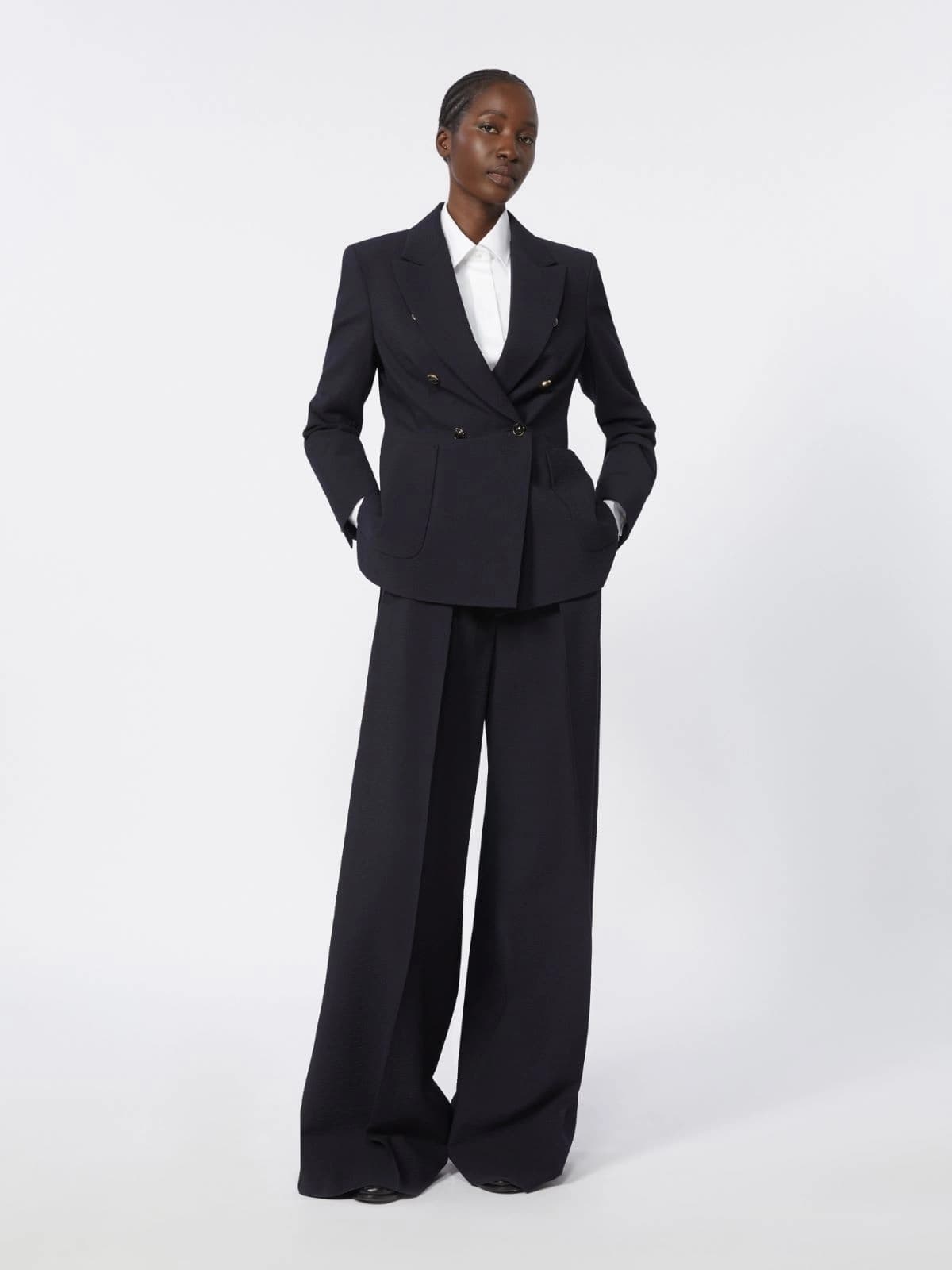
Editorial spring outfit with relaxed tailoring and light layers

Start with the weather, not the mood board

The biggest mistake people make with spring dressing is treating it like a clean break from winter. In reality, spring is a negotiation. The air can be cold in the morning, warm in the afternoon, windy at night, and damp in between. If your wardrobe only works in one of those conditions, getting dressed becomes a string of compromises.

That is why a strong spring wardrobe starts with function. Before you think about trend pieces or a new color story, ask what your week actually looks like. Do you commute early, spend time in over-air-conditioned offices, walk a lot, or deal with frequent rain? A spring wardrobe should answer those questions first. Once the practical structure is right, the style decisions become easier and better.

This is also the season when random purchases tend to creep in. A pastel knit, a light jacket, a pair of loafers, a printed blouse. None of those pieces are wrong, but they can quickly become isolated if they do not connect to what you already own. HiLo's point of view is useful here: the goal is not to collect good items one by one. It is to build a wardrobe whose pieces can support each other.

Think of spring dressing as controlled transition. You are editing winter weight out of the wardrobe while keeping enough structure, warmth, and polish to deal with inconsistency. When you frame the season that way, a spring wardrobe stops feeling vague and starts feeling buildable.
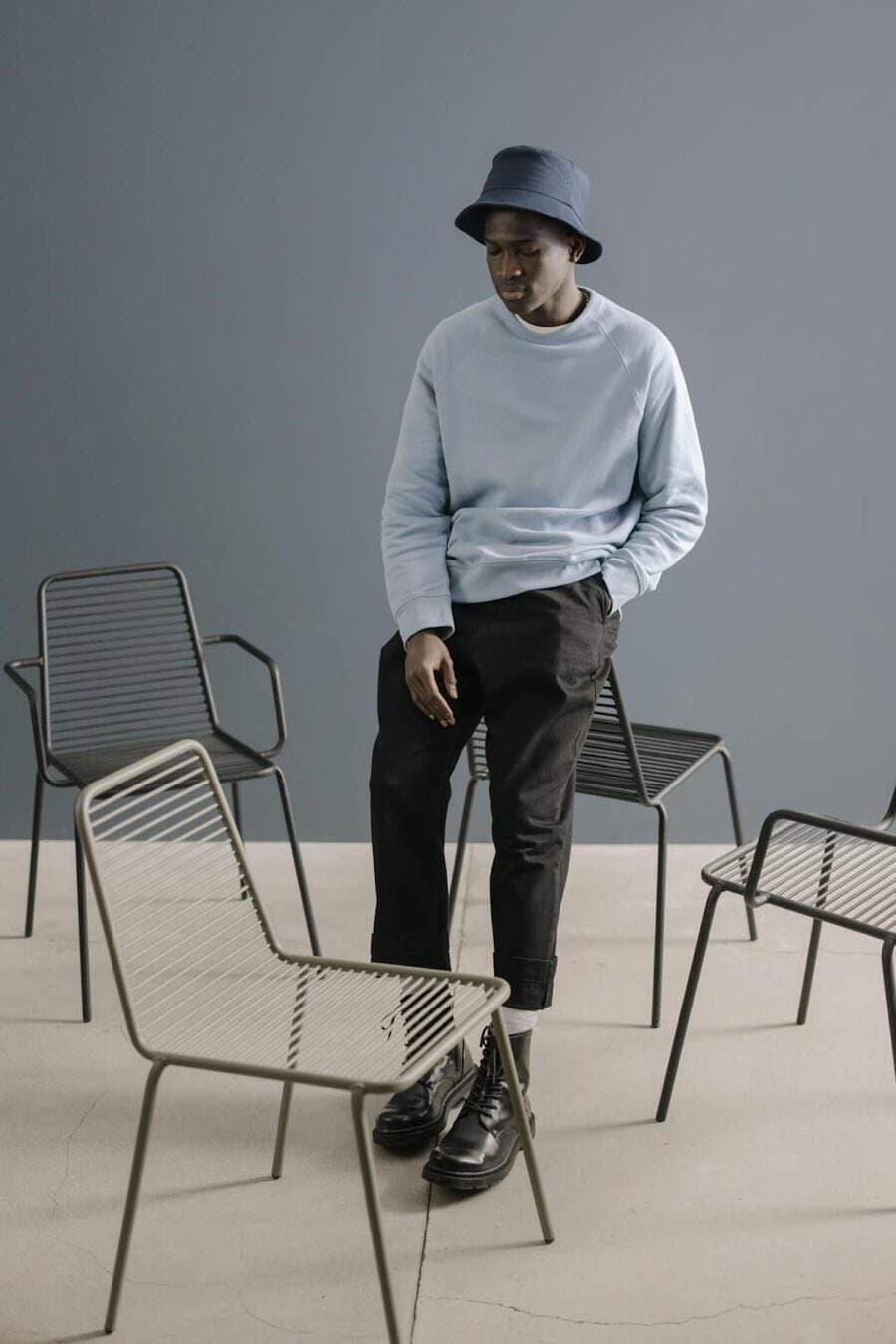
Street style spring outfit with light layers

Street style example of a spring outfit built with two light layers

Photo by Mathias Reding on Pexels

Build a spring capsule that actually covers the season

A useful spring wardrobe does not need to be huge. It needs range. A 15-piece capsule is a practical target because it gives you enough variety to dress for weather swings without drifting into clutter. That does not mean everyone needs exactly 15 items, but it is a helpful scale for balancing flexibility and restraint.

The easiest way to build the capsule is to break it into categories: solid tops, expressive tops, light layers, bottoms, shoes, and accessories. The category mix matters because spring outfits depend on interaction. A striped tee is more useful when it works with your trench, your chinos, and your loafers. A cardigan earns its place when it layers over poplin, under a field jacket, and with denim.

Flat lay of a labeled spring capsule with tops, outerwear, bottoms, shoes, and accessories

Flat lay of a labeled spring capsule with tops, outerwear, bottoms, shoes, and accessories

Start with tops that can move between casual and polished

Begin with dependable solids. A white T-shirt, an ecru tee, a navy knit polo, a pale blue button-down, and a crisp white poplin shirt will cover a surprising amount of ground. These are not the exciting pieces, but they are the pieces that make the rest of the wardrobe usable.

Then add a smaller group of tops with personality. A striped tee, a subtle floral blouse, a soft pastel knit, or a checked shirt can freshen the wardrobe without taking it off course. The test is simple: each expressive top should work with at least three bottoms and at least one outer layer you already trust.

Use outer layers to solve the season

Spring is often won or lost with outerwear. A trench coat remains one of the most useful spring pieces because it handles rain, layers easily, and instantly adds polish. A lightweight field jacket or chore coat gives you a more casual option that still has structure. An unlined blazer fills the gap for office days, dinners, and any moment when a hoodie or cardigan would feel too relaxed.

Keep these layers light enough to carry or drape over a chair. If an outer layer is so heavy that you resent wearing it by noon, it belongs to winter. Spring outerwear should protect you without trapping you.

Editorial comparison of a trench coat, chore jacket, and unlined blazer

Trench coats are a stylish way of protecting yourself from spring weather

Photo by cottonbro studio on Pexels

Choose bottoms and shoes that keep the wardrobe moving

For bottoms, aim for a mix of comfort and polish: straight-leg jeans, relaxed chinos, a darker tailored trouser, and one lighter trouser in cotton twill, linen blend, or lightweight wool. If skirts or dresses are part of your wardrobe, a midi skirt or an easy dress can stand in for one of those trouser slots, as long as it layers well.

A spring shoe rotation does not need to be extensive. Loafers, clean sneakers, ankle boots, and either slingbacks, ballet flats, or another light dress shoe will cover most situations. The goal is to avoid a wardrobe where every outfit rises or falls on one pair of shoes. In spring especially, flexibility matters.

Choose lighter fabrics, not flimsy ones

Spring fabrics work best when they feel breathable but still hold shape. That balance matters because spring clothing often has to do two jobs at once. It needs to be comfortable once the day warms up, but it still needs enough body to layer cleanly and look intentional.

This is why the fabric shift from winter should be gradual. You are not replacing every textured or structured piece with something airy. You are stepping down in weight. Poplin instead of oxford. Chambray instead of heavy denim shirting. Lightweight wool instead of thick flannel. Linen blend instead of dense cotton twill.

Close-up comparison of spring-friendly fabrics including poplin, chambray, linen blend, and lightweight wool

Close-up comparison of cotton poplin, chambray, linen blend, and lightweight wool

Photo by www.kaboompics.com on Pexels

Crisp cottons and chambray give spring its backbone

Cotton poplin is especially useful because it looks clean, breathes well, and layers neatly under knits and jackets. Chambray offers a similar practicality with a little more texture and ease. Both fabrics help spring outfits feel lighter without slipping into shapelessness.

These fabrics also make it easier to build a wardrobe that mixes casual and polished pieces. A poplin shirt can go under a blazer for work, then under a trench with jeans on the weekend. A chambray shirt can sit over a tee, under a chore coat, or with tailored trousers if you want the outfit to feel less formal.

Curated Product Recommendations

Staples

Province of Canada

Washed Poplin Shirt Navy - Unisex

Shirts

Washed Poplin Shirt Navy - Unisex
Staples

Province of Canada

Oxford Stripe Shirt Navy - Unisex

Shirts

Oxford Stripe Shirt Navy - Unisex

Linen blends and lightweight wool add relief without losing polish

Pure linen can be excellent in hot weather, but early spring often calls for a little more control. Linen blends are often easier to wear because they keep the airy texture people want from spring clothing while wrinkling less aggressively and holding shape better through the day.

Lightweight wool is one of the more overlooked spring fabrics. In an unlined blazer or relaxed trouser, it drapes well, handles temperature changes gracefully, and looks more refined than many stiff cotton options. If you want spring outfits to feel lighter but still polished, lightweight wool is often a better answer than simply going thinner.

Curated Product Recommendations

Elevated

COS

Men’s Belted Linen Blend Relaxed-Fit Wide-Leg Pants

Trousers

Men’s Belted Linen Blend Relaxed-Fit Wide-Leg Pants
Designer

Max Mara

Wool seersucker trousers

Trousers

Wool seersucker trousers

Keep a few light knits in play

It is a mistake to pack away every sweater the moment the calendar changes. Spring still needs fine-gauge knits, light crewnecks, and cardigans. These pieces are not leftovers from winter. They are essential tools for mornings, shade, travel, and rainy days.

The difference is scale. Thick, fuzzy, heavy knits can usually step back. Fine-gauge cotton, merino, or lightweight cashmere blends can stay. They let you add warmth without building bulk, which is exactly what a strong spring wardrobe needs.

Curated Product Recommendations

Staples

Province of Canada

Cotton Knit Sweater Ecru - Unisex

Knitwear

Cotton Knit Sweater Ecru - Unisex
Staples

NORSE PROJECTS

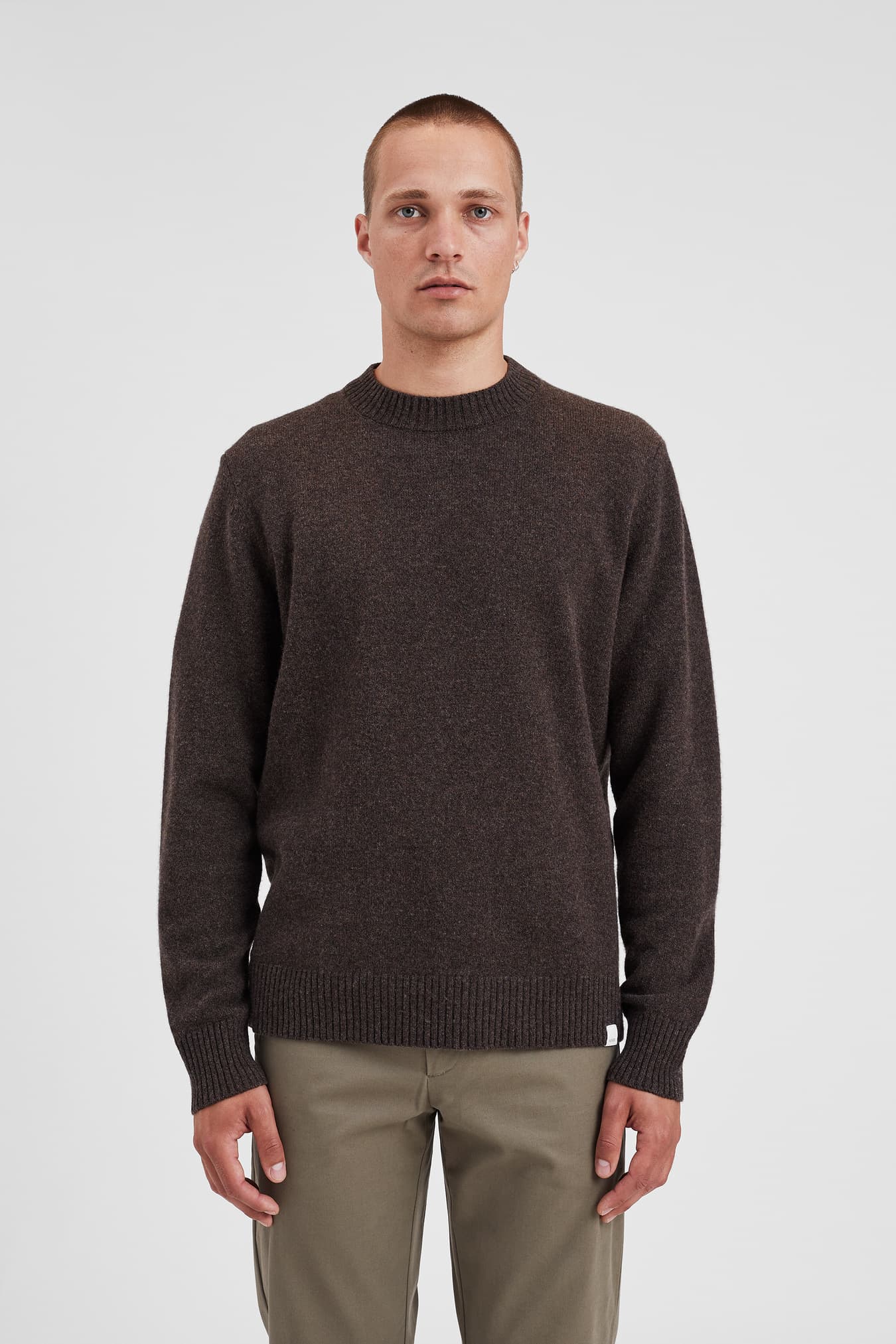
Norse Standard Merino Lambswool Sweater

Knitwear

Norse Standard Merino Lambswool Sweater
Elevated

KOTN

Women's Asymmetric Zip Sweater

Knitwear

Women's Asymmetric Zip Sweater

Use color to wake up the wardrobe without breaking it

Spring often pushes people toward color before they are ready. After months of darker tones, it is tempting to buy a handful of pastels and call it a reset. The problem is that a wardrobe built on sudden color swings can feel less cohesive than the winter wardrobe you were trying to refresh.

A better approach is to keep a neutral base and introduce color with control. Navy, beige, white, ecru, olive, grey, and black still do most of the work. Spring color comes in as a supporting cast, not a full replacement.

Spring color palette graphic with navy, beige, white, soft yellow, and soft lavender

An overview of spring color combinations that you can use for inspiration

Anchor the wardrobe with steady neutrals

Neutrals make spring outfits easier because they let lightness come from fabric and silhouette, not just color. Beige chinos feel spring-ready because of their tone and fabric. An ecru jean feels fresher than dark denim even if the outfit stays mostly neutral. A pale blue shirt changes the mood of a wardrobe without forcing a new identity.

If your neutral base is solid, adding one or two seasonal colors becomes much easier. You do not have to wonder what works with what because the foundation is already doing the stabilizing work.

Add one or two accents and one controlled print

Choose accents that feel plausible with your existing closet. Soft yellow, muted lavender, sage, faded red, or washed coral can all work in spring, but you do not need all of them. Two is usually enough. One can appear in knitwear or shirting. The other can show up in accessories or a smaller statement piece.

Print should work the same way. Stripes are useful because they feel classic and easy to mix. Florals can work well too, especially when the scale is restrained and the colors tie back to your neutral base. The goal is not to prove you can wear spring colors. It is to make the wardrobe look more alive while still feeling connected.

Layer for movement through the day

Spring layering works best when each layer can stand on its own. If your whole outfit falls apart the moment you take off a jacket, the look was never flexible enough for the season. Each piece should contribute something when worn and when removed.

A useful spring formula often starts with a breathable base, adds one light insulating layer, and finishes with a practical outer layer. For example, a poplin shirt, fine-gauge cardigan, and trench coat can handle a cold commute, a mild afternoon, and a breezy evening without feeling overbuilt.

This is also where proportions matter. Spring layers should be light enough to stack cleanly. Bulky sweatshirts under tailored coats often look and feel awkward. The same is true of very tight layers that do not allow movement. Aim for ease, not excess. A little space in the shirt, a cardigan that skims, and outerwear that accommodates one more layer usually gets you there.

Accessories can help more than people expect. A lightweight scarf, a cap, sunglasses, or even a thin sock change can extend the usefulness of an outfit without forcing a full change. Good spring wardrobes respect small adjustments.

Outfit breakdown showing a poplin shirt, cardigan, trench, chinos, and loafers

Outfit breakdown of a poplin shirt, cardigan, trench, chinos, and loafers

Turn the wardrobe into repeatable outfit formulas

A spring wardrobe is only as good as the outfits it can produce on an ordinary Tuesday. If you have good individual pieces but still default to the same combination every week, the wardrobe is not working hard enough yet. Outfit formulas solve that. They give you a repeatable structure you can vary through fabric, color, and accessories.

Editorial collage showing office, weekend, and evening spring outfits

Three-look editorial collage showing office, weekend, and evening spring outfits

For workdays

Use a crisp shirt or knit polo, a lighter trouser, and one structured layer. A pale blue poplin shirt, stone chinos, loafers, and an unlined blazer is polished without feeling stiff. Swap in a trench for the commute and remove it once you arrive. If your office is more relaxed, a striped tee under a blazer with dark jeans can still feel considered if the shoes are clean and the proportions are tidy.

For weekends

Weekend spring outfits should still benefit from the same logic. A chambray shirt over a white tee, relaxed chinos, clean sneakers, and a chore coat gives you layers, comfort, and shape. If the day gets warmer, the chore coat comes off and the outfit still works. That is the benchmark.

For dinner, events, or a more dressed-up mood

Spring can also carry a little softness. A fine-gauge knit in a muted color, a dark jean or lightweight tailored trouser, and a clean loafer or slingback can feel dressed without looking severe. A light blazer or elegant cardigan adds finish. This is where a seasonal accent color often earns its keep. Soft yellow, lavender, or sage can feel especially good in the evening when the rest of the outfit remains grounded.

Once you have three or four formulas like these, the wardrobe becomes much easier to use. You are no longer asking what to wear from scratch. You are choosing a structure, then adjusting it for weather, setting, and mood.

Common Mistakes

Putting all your winter pieces away too early

Spring still needs a few lightweight sweaters, one reliable pair of boots, and some structured layers. Removing every cool-weather piece at once usually leaves you underprepared for the first cold week.

Buying only trend-forward or pastel pieces

A spring wardrobe needs freshness, but it still needs anchors. If every new purchase is a statement color or seasonal trend, the wardrobe starts to feel scattered instead of renewed.

Confusing lightweight with low substance

Thin fabrics are not automatically better for spring. Pieces that are too sheer, too limp, or badly finished often look tired quickly and layer poorly.

Building outfits that only work with the jacket on

Spring looks should survive changing temperatures. If the base outfit looks incomplete the moment you remove an outer layer, rethink the combination.

Practical Examples

Office day with a cold start

Pale blue poplin shirt, fine-gauge navy cardigan, stone chinos, tan loafers, and a trench coat. The cardigan handles the morning, the trench handles wind or rain, and the shirt-trouser base still looks sharp by midafternoon.

Casual Saturday with shifting weather

White tee, chambray shirt worn open, olive chinos, clean white sneakers, and a lightweight chore coat. If the temperature climbs, remove the coat first, then the overshirt, and the outfit still feels finished.

Spring dinner or drinks

Muted lavender knit, dark straight-leg jeans, black slingbacks or loafers, and an unlined blazer. The accent color keeps the look seasonal, but the darker base prevents it from feeling sugary.

Rainy weekday that still needs polish

Striped tee, lightweight wool trouser, trench coat, waterproof ankle boots, and a thin scarf. The mix feels relaxed but intentional, and every piece is practical for wet pavement and shifting temperatures.

Product Call-Out Ideas

Pieces that work well for this

  • trench coat
  • lightweight chore jacket
  • unlined blazer
  • cotton poplin shirt
  • fine-gauge cardigan
  • straight-leg jeans
  • relaxed chinos
  • leather loafers

Wardrobe staples for rainy spring days

  • lightweight scarf
  • ankle boots
  • cotton knit
  • tapered trouser
  • structured tote

Easy spring color additions

  • striped tee
  • soft yellow cardigan
  • sage shirt
  • washed red scarf
  • lavender knit polo
  • slingback flats

HiLo Takeaway

A good spring wardrobe is not a pile of fresh arrivals. It is a system of lighter layers, breathable fabrics, grounded colors, and reliable outfit formulas that keep working as the day changes.

When you shop for spring, look for pieces that connect. A trench should work with denim and tailoring. A striped tee should work under a blazer and with casual outerwear. A seasonal color should still make sense with your core neutrals. That is how a wardrobe becomes cohesive instead of merely seasonal.

FAQ

How do I build a spring wardrobe without buying everything new?

Start by editing what you already own. Keep the pieces that can handle transition weather, such as light knits, structured shirts, straight-leg denim, and practical outerwear. Then fill the real gaps, usually one outer layer, a few breathable tops, and shoes that feel lighter than winter boots.

What fabrics are best for spring weather?

Cotton poplin, chambray, linen blends, lightweight wool, and fine-gauge knits are especially useful in spring. They breathe better than winter fabrics but still hold enough shape to layer well and look polished.

How many shoes should a spring wardrobe have?

Four pairs is a practical starting point for most people: one loafer or polished flat, one clean sneaker, one boot for wet or cold days, and one lighter dress shoe or open style if your climate allows it.

What colors make the most sense in a spring wardrobe?

Keep a strong neutral base of navy, beige, white, ecru, grey, olive, or black, then add one or two accent colors. Soft yellow, lavender, sage, washed red, or pale blue can work well when they connect back to your neutrals.

How do I dress for cold mornings and warm afternoons in spring?

Use layers that can be removed one by one without ruining the outfit. A breathable shirt, a light knit, and a trench or field jacket is a reliable formula because each layer works on its own as the temperature changes.

Related Guides

Keep reading

View all guides

More related HiLo guides are coming soon. You can return to the style guide index to see the latest published articles.